In association with CLOWNS WITHOUT BORDERS and BOND STREET THEATRE

Showing posts with label culture. Show all posts

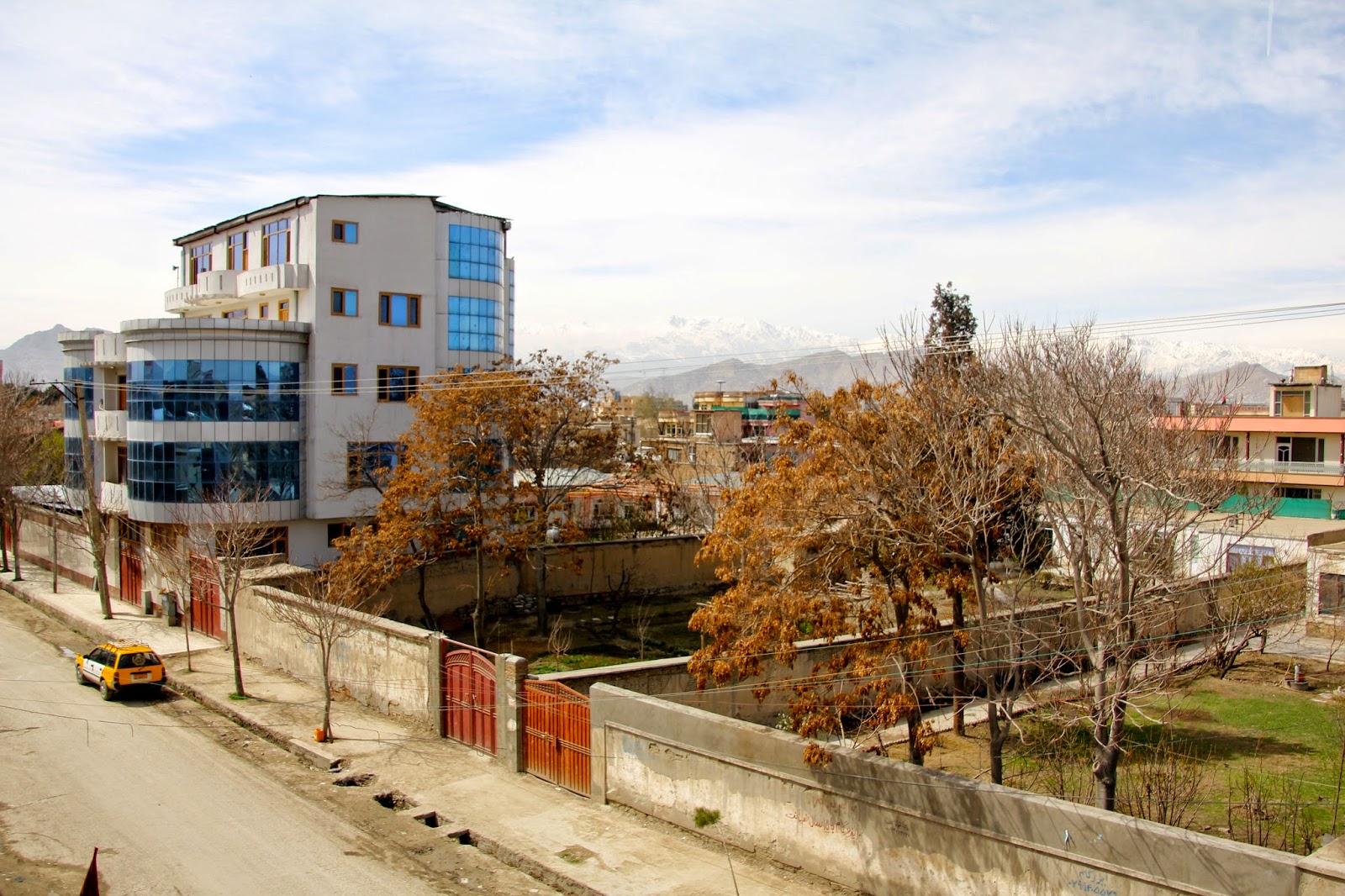
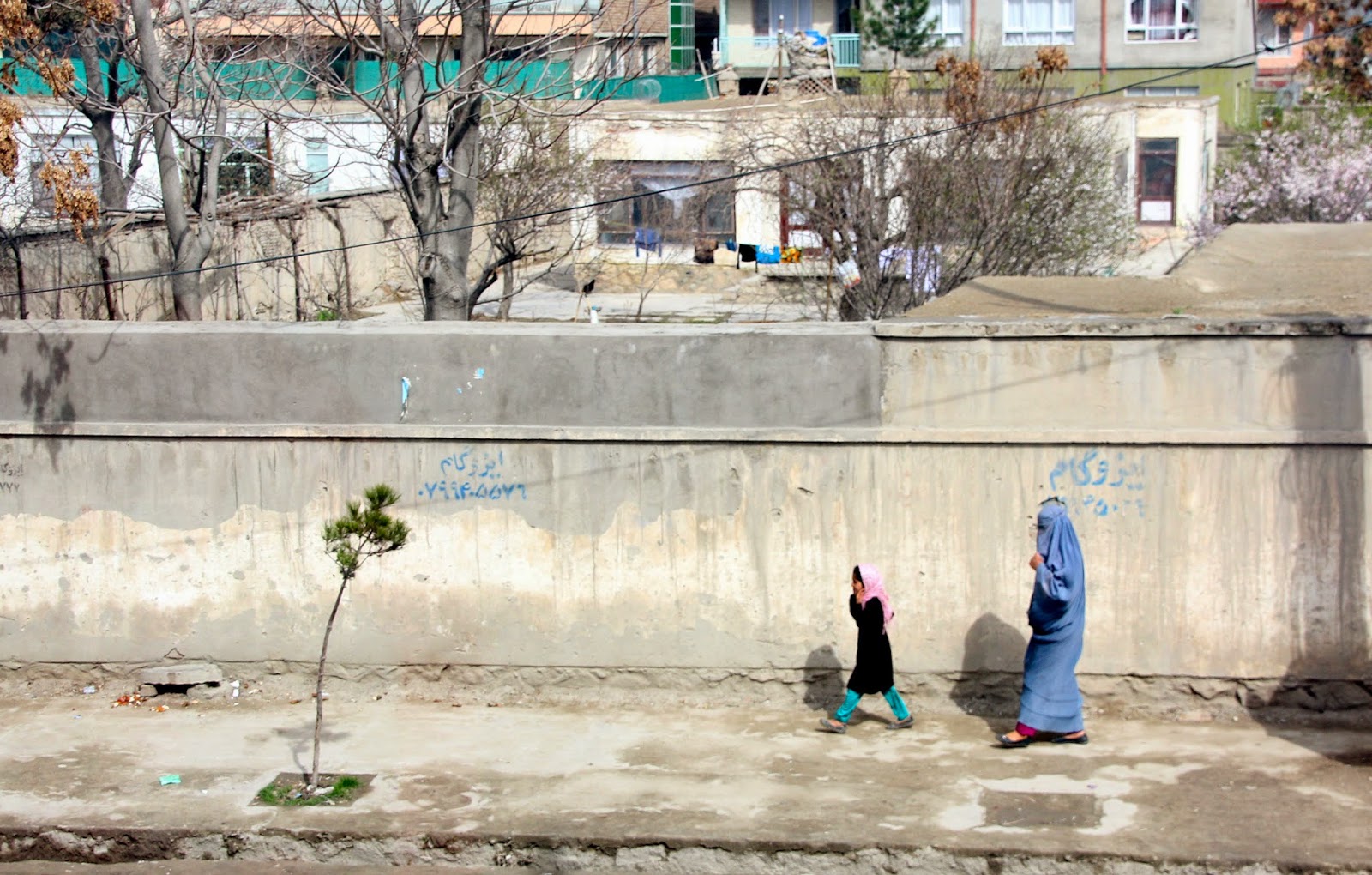
Streets of Kabul


Staying in Kabul a few days before going on to Herat, while Bond Street Theatre checks in on its other ongoing youth project, and gearing up for our upcoming endeavor. BST now has a headquarters office in Kabul to manage its youth engagement project spanning the next two years. A whole house with sleeping accommodation, office and workshop space. It's managed by an Afghan staff and they don't want the neighborhood to know there are foreigners here, as it might cause all kinds of complications (due to security concerns and corruption), so we're not allowed to go out on the street.

My first day in Kabul I spent the day inside and watched life go by outside the window. People walking by on the way to work, school, shop. Women with children, a man with a little boy, a couple of teenage boys hanging out, school girls on the way home, old men on bicycles bringing home bread, and children flocking to the ice cream man. Ordinary, peaceful life. (Occasionally interrupted by the loud sound of a military helicopter.)


A couple of days later I got the chance to go shopping on Chicken Street (where they don’t sell chickens, but a lot of traditional jewelry, clothing and arts & crafts). Bought a few things, but mostly enjoyed saying hello to the shopkeepers. Salam aleykoum, khob asti? Nam-e chist? Az didaretan khosh shoudum! Practicing my Dari and making new friends. There was Khoja Sardar, the tailor with fantastic colorful Afghan dresses, and Amin, the tea seller on the street who refused to let me pay for my tea because I was his guest, but also Turyaleh, the little shoeshine boy who was so very sad... I felt so bad for him. 


Everyone I’ve come across is quite friendly. And they all offer tea, of course. Afghans are very hospitable. Watching people go by the window outside the house the other day, I was struck by the ordinariness of it, just regular peaceful life. But then you have what happened to Farkhunda, so brutally murdered in midst of day at the mosque by a mob – beaten, stomped, run over by a car, burned – the level of brutality hard to comprehend. How does a mob form to do such a thing, so suddenly, immediately, on a notion (“she’s burning the Quran!”). Would any of these people walking by on the street do that? This and all the security warnings from everybody (some of our Afghan friends feel it’s too dangerous for us to leave the house), it makes you feel life here is precarious and unpredictable, seemingly calm, but at any moment… shit might hit the fan and you might get killed. As has been pointed out, after three decades of war and conflict, the people of Afghanistan are suffering from post-traumatic stress disorder. But it seems this incident has been a wake-up call for many.

I went to the Shah-e-Doh Shamshira mosque and there was a demonstration under way with heavy police presence. A policewoman frisked me, and then we smiled and shook hands, and my companion and I chose to go another direction. On the loudspeaker a voice condemned in Dari and English the "vicious cruel attack." I would've liked to have taken part in this protest but it was not a good idea to get too close.

We instead proceeded down the market street on the other side of the river. Bustling with people going about their lives, shopping for all kinds of sundries, and nobody paying me any mind (as the sole foreigner among them). Feeling a little apprehensive, but then quite safe and comfortable. I stopped and chatted with Moska, a young woman selling bangles on the street, and bought a few gifts for the girls in Herat.


Afghanistan: Baba-jan and badan-jan

We are living with our Afghan partner Monireh's family -- her sister Madiya, brother Reza (who are both in the workshops and the shows we are doing -- theater runs in the family), and then her mother and father.  It's a typical Afghan house with a tiny courtyard behind a tall gate along a dirt road in the midst of Jabraeil, a village community right outside the town of Herat. 

The father is really funny, he’s quite the clown!  Good humor abounds in this household.  He has decided I’m his American daughter, his sixth daughter after Nahib, Monirah, Tahira, Halima and Madiya (or actually I would be the first, since I’m older).  He’s having a good time playing with this.  “Dokhtar-jan”! he calls out (“daughter, dear”).  Come here, time for breakfast, time for tea, time for joking around.  So I call him “baba-jan.”  I had learned that “baba” is how you say daddy in Dari, and “jan” is a term of endearment you add after a name, like saying “dear.”  I give him a hard time and he threatens me with the fly swatter, all in good fun.  Last night we were having tea and fruit after dinner, and he starts singing to me, a lullaby about “dokhtar” and “baba.”  That’s so sweet!  Joanna and Michael are juggling the oranges and putting on a show.  Impromptu we start making percussive sounds, the father drumming on his big belly.  Lots of laughter together.  These are the precious moments!


This is an Afghan man with a good heart.  We hear so much about women being oppressed, forced marriages, abusive husbands, horrible men.  But of course not all men are like this, there are good happy loving homes and families too in Afghanistan.  This is one of them.  I can see that Sayed Hassan loves and appreciates his wife, Fatima, very much. Yesterday in the afternoon, while we were enjoying tea time together, he leaned his head on her shoulders and looked at her with adoring eyes.  Then he tweaked her nose.  Ever the jokester.   Even if it’s an easy-going and open-minded family, it’s still a traditional house-hold, since the father is adamant the women must wear the head scarf with Michael there; and the mother does the cleaning up, while the father takes a nap.  But then when I jumped in to do the dishes after lunch, and Michael took it upon himself to clean up after dinner, the father sprang into action and had to show how it’s really done.  I thought to myself, here’s a first! An Afghan man doing dishes!  I bet he’s never done this ever before, but he was quite swift so he might have some experience after all.  And actually he does do household chores, he helps with the laundry and they do the cooking together.

You can click on photos to view larger

Everyday baba-jan goes to the market to get the greens for the day’s cooking, and then sits and chops them all up to make, for example, “ku ku” – like a vegetable patty, or quiche but without the crust.  And let’s not forget the “badan-jan” – eggplant with tomato fried in a lot of oil.  I normally hate eggplant but this is really good!  And thank goodness, because it’s served every other meal. 


 Badan-jan with nan

But the best is the “bulani,” which are like pierogis filled with cooked greens or potato, and making this is a whole family affair – madar-jan flattens the dough, baba-jan puts the filling on, and sister Monireh readies them for the cooking and fries them up on the stove.  And then I eat them!  Yum!  


-

Afghanistan: Another day in Jebraeil

Another little missive from April 10:

Hello,
Today had a day off. Good, cuz I was sick all night. It was probably the home-made yoghurt the father made for me. But didn't last too long.


We went for a walk around the neighborhood and down the street with the market and little shops. I had my camera with me and we were taking pictures. I bet they never had tourists here before! We definitely stirred up some attention. But all in a good way. A man in his breadshop called us over to take photos, and we checked out how they made bread – they bake it deep in a hole in the floor and then lift it out, flat and round and hot and fresh – and we got some to eat. Mmm, naan! As we continued on, a man here and there would come up to Michael to engage in conversation and ask where we're from and whenever we would stop to chat, a crowd would gather to check us out. (I noticed they never addressed me or Joanna; and I assume they didn’t because that would be inappropriate, as in this culture men are not supposed to talk to women they do not know on the street.)  School had let out and the street was filling with little school girls in ‘nun’s habits’ eating ice cream, and soon a bunch of them were gathered around us, giggling and whispering, and following us down the street like we were the Pied Piper.  But whenever Joanna pulled out the camera they hid their faces in their hijabs. You can't take pictures of women, not even when they're little girls!


As we got home, the neighbors' kids were out on the street playing and we yucked it up with them again, as we had before, it's become a game of making faces and playing monster. This adds to the novelty of our presence, I’m sure, because I imagine no adult here, and definitely no woman, would play like that with them and make funny movements and faces -- on the street! Crazy foreigners!  After we had entered our house (behind a large iron gate, most Afghan houses are hidden behind a wall and gate), there was a loud banging. I opened up, and there were three of the school girls again. Don't know how they found us (we had left them behind further down the street), but I guess it's not that difficult, since we're the only foreigners in town. Come to the market with us! they shouted. Come, let's go! Now? Yes, now! Well, maybe another day, ok? We were actually quite tired at this point, and really needed a nap.  Still, I would've been game to go, but I can't go off by myself, even in the entourage of little school girls. That was so funny, though, and sweet, that they were so excited at meeting us that they came to get us to go to the market with them. Badan mebinim! (See you later!)


Later in afternoon, someone was coming over to fix the refrigerator that wasn't working (although they had just bought it). We were told the man was Taliban so we better stay in our rooms and not show ourselves. Well, the man was Pashtun, and to our hosts (who are Hazara) any Pashtun man who wears a turban is Taliban, which of course isn't true, but I guess it's good to play it safe!


We also spoke with a young man who was here in Herat on visit, but works down in the Helmand province (next to Kandahar) as an interpreter for the US Marines. He said it was very dangerous, for him as someone working for the Americans, and for us if we wanted to go there, because [finger across throat], they'll behead us all. And it doesn't help that he's Hazara. They don't like us cuz we're foreigners? Joanna asks. Pashtuns don't like anyone who's not Pashtun, he says.


Another fun day in Afghanistan!

-

Afghanistan: Welcome to the Land of the Brave

-
Coming in to Kabul, we fly over craggy snow-covered mountains.  These are the Hindukush, and I can almost touch them. Then the mountains lose their peaks and turn brown and sandy. Groupings of walled compounds form geometric patterns on the plains. Are they meant to hold animals or people? I can’t make out any houses. But everything’s the same color, mud and sand, and blends in. When we land we are surrounded by the mountains, and greeted by a gigantic sign that reads: “Welcome to the Land of the Brave.”

As we drive into the city from the airport, we pass distressed or ruined buildings mixed with many new structures under construction. And lots of billboards advertising things. Even a digital one with filmed commercials! Which seems incongruously modern. Most buildings are simple drab one-story structures, and the roads are of dirt and stone.  And there are donkeys pulling carts.  But also plenty of fancy cars.  I see some women still in burqas, and men in traditional clothing (long tunic with loose pants and turban or traditional cap, or the pakol wool hat made famous by Massoud, the Mujaheddin 'Lion of Panjshir').

Most women wear a scarf loosely slung around their head with some hair visible in front. That’s not so strict compared to what I’ve seen elsewhere in the Muslim world where the head scarf is tightly wound around forehead, cheek and chin. From burqa to a loose scarf is quite a jump. But, as mentioned, there are still women wearing the burqa. At the airport, there was a young girl without a head scarf and sporting Mahnolo Blanik-like high heels, looking very hip and beautiful. She was next to an equally hip and handsome-looking young guy in jeans and T-shirt. The new Afghan generation? I wonder if once she went outside she put on a scarf. I put mine on as I stepped off the plane.

I’m not getting much of an impression of the city as a city at first. I think we’re still winding our way in to Kabul when suddenly we stop: here we are at the hotel. Huh, where? Seems we’re in the middle of nowhere.  This is Kabul? Apparently we are already right in the center of the city. But the road is still dirt and stone. We’re in front of a non-descript building with a little door on the side – would never guess this was a hotel! Perhaps this is a good thing. Hotels have been known to get bombed.

Next day we go to the Ministry of Economy and the Ministry of Foreign Affairs so that Bond Street Theatre can register as an NGO (Non-Governmental Organizations, which most humanitarian orgs are). These buildings are more stately and there’s also a newly constructed shopping mall. Soldiers and police are stationed in the area holding machine guns, with one mounted on top of a truck. A gigantic photo of Karzai flanked by children graces the side of a building.

Later in the afternoon, we go for a walk in the neighborhood where we’re staying, which is in the Shar-e-Naw section of Kabul. There’s a park and a cinema at its entrance. Men hang out on the street corner as money changers, waving large bunches of bills. Apparently they are legit. We go in a little clothing shop to check out the wares, and the shopkeeper offers us tea. Wherever you go, you always get tea. On our way back, we stop at a breadmaker’s shop on the corner. There are piles of flat round “nan” (the traditional Afghan bread, which kind of look like pizza without any toppings) piled up in the window. The shopkeeper is sitting in the window too, while behind him young men prepare more nan.  I want some, I exclaim, and take out my dictionary so I can ask for bread. The old man puts one large round nan in a bag and hands it to me. He waves with his hand and won’t take any money. How much, I try to ask, consulting my dictionary again. They all laugh and he good-naturedly waves his hand again. Oh, it’s a gift! Tashakor!

We eat it right away as we walk down the street, it’s so fresh and warm, mmmm! Then turning onto the street to our hotel, we come upon the kids begging whom we had seen earlier and I give the rest to them. The next day three other street kids follow us, one of them the same boy I had seen before, still smiling and sprightly with lots of charm. I can’t shake them and eventually start goofing with them – since the boy keeps talking to me and I have no idea what he is saying, I start making the same sounds back for fun, speaking gibberish, which they all find very funny so we play with this for a bit. Then I make 'batman' eyes with my fingers, and he reciprocates by turning one of his eyelids inside out and excitedly gesturing for me to look, “Madame!” Eww! He giggles. When we pass a street vendor, I decide to get them each a plate of dumplings (served with tomato sauce). They’re happy, we shake hands and I go on my merry way with Joanna and Michael.

We’re on our way to a dinner meeting and figured it’s close enough we can walk, and I’m pretty sure of the way. No problem. Unfortunately, I end up leading us all astray into a no man’s land of desolate streets in the complete opposite direction from where we should be. And it’s getting dark. Uh-oh. That really was not so smart. Luckily a friendly soldier and a nice young Afghan man on a bike come to our rescue and lead us down to a main thoroughfare where they get us a reliable cab. It is not advisable to take taxis as foreigners but it is better than walking the streets of Kabul in the dark! And the adventures have begun.

-

Port-au-Prince

So we arrive in Port-au-Prince and we actually don't even know where we're gonna stay!  We were supposed to lodge with someone in a private house on Delma 75 but there was a bit of a snafu with the arrangements.  Luckily, we eventually found a nice and simple little hotel right near where our partner BAI is located -- the Bureaux des Avocats Internationaux, which is facilitating our partnership with the women's groups.  Convenient.   

And as it turns out the space where we end up holding our workshops -- the Heartland Alliance -- is not too far away either.  So we decide to just stay at the hotel for the whole time.  It’s not cheap, but it could be worse.  We get a deal from the hotel manager, Reggie, our new friend.  And it’s very central on avenue Lalue.  In fact, we can even walk to our workshop space, which we do a couple of times. But usually we take a cheap and local taxi ride.  

Port-au-Prince is not as dangerous to us as I had come to expect from news reports and other accounts.  We had thought we had to hire a driver and a car in order to get around, which is really expensive (most everything is quite expensive actually in Haiti, especially transportation and accommodation due to price gouging of short supply and high demand... and the presence of lots of rich foreign aid workers).  We end up not hiring a driver and just relying on walking or taxi.  I always prefer to travel locally anyway if possible.

We have an easier time because we have trusty Morlon with us, our Haitian team member!  I met Morlon last September when I was in Grande Goave with Clowns Without Borders.  He was one of our trainers in the workshop we did, and he was so great that I immediately thought of him as we prepared this project -- why not have him join us!  So he's performing in our show with us and co-teaching workshops.  And, of course, translating.

With Morlon leading the way we can safely walk around most anywhere, although not everywhere.  And of course he negotiates with the taxi driver for us, since our Kreyol is not so good.   I speak French, which most Haitians do as well, but not all.

In the beginning, especially the couple of days before Morlon joined us, I did most of the communicating for the group.  So I would order dinner for Josh and Christina.  What's funny with this is that everyone assumes Josh is Haitian (because he's black) and so the waiter was really perturbed by the fact that he didn’t order for himself.  He looked askance, passed Josh and threw out a comment at him, which we could only assume to mean, "Why are you letting this woman speak for you?  What's up with that?!"  Once he understood that we are all three Americans, and only I spoke French, all was well with the world again.  But constantly people would speak to Josh in Kreyol and they were really confused by the fact that he claimed to not be Haitian, not even a little bit.  Because he's black, so obviously he must be of Haitian descent.  Obama is!  (Apparently, a lot of Haitians think this!)

Then Morlon joined us and the wait staff was really confused.  They thought we had dragged him in off the street out of mercy to offer him a meal.  No, we don't know if they thought that, but they insisted in any case that we pay his meal, whereas breakfast was to be included with the room for all of us.  He's staying with us, he's one of us, we insisted!  It took a little while to sort that out.  We have a sneaking suspicion this hotel is a hook-up hotel, since we mostly see couples.  So probably everyone thinks Christina and I are there with our Haitian lovers!


But soon they realize otherwise, after we start rehearsing on the roof and showing off our clown antics!  I'm not sure what they think of us now.


Saturday, a couple of days after arrival, we walked through the neighborhood and further on to find a market where we could buy a bucket.  We walked all over without a problem, past vast tent camps in the downtown Champ de Mars area, and past the presidential building that lay in ruins.  I bought some sugarcane, and a pair of flip-flops from a woman selling her goods on street. A couple of kids tagged along behind us for a while. I wish I had goofed with them more, usually I do, but here I was acting incognito (that is, not like a clown, it's not like I could hide that I stood out like a sore thumb, being a white foreigner!).  When we got further downtown, Morlon did say we had to be careful, because robbers and other bad guys congegrate in this area, so it’s a bit more volatile.   

On the way back we find ourselves in the midst of a demonstration.  But it was a good demonstration in a mostly celebratory spirit – manifesting for human rights and dignity.  Everyone waving Haitian flags, chanting, and carrying placards saying “Respect Our Children." A loudspeaker truck played music and then the national anthem, followed by soldiers and police.  The maids of the hotel gathered on top of the roof looking on and dancing to the music.  This was all very interesting to witness!  I only wish this spirit of solidarity and support for human rights and for children was more apparent in the everyday life of Haiti.  From all I hear, it's not the norm for many women and children in the camps and elsewhere. (Consider the long-time practice of "restaveks" -- child servants.)

Another night there were pre-carnival festivities. A gigantic truck was being set up with loudspeakers to play music that the crowd then follows while dancing down the street.  We didn’t even know when we planned the timing of this trip that it would coincide with carnival, which we’ll have a chance to experience, very exciting!  We wanted to go out and find another restaurant down the street as opposed to eating at the hotel restaurant.  But all the street lights were out, and it was dark, and it really wasn't a good idea to be walking around out there at that point. Which revealed itself to be true, because when we stepped out for a moment, I was confronted by a very aggressive and hostile man. I didn't understand what he was saying, but politely greeted him with a "bon soir" which apparently aggravated him further.  “Bon soir!?” He spat back with contempt and outrage.  I don’t know what he was going on about but it wasn’t friendly and the situation was escalating.  Morlon quickly emerged from the crowd and said let’s go back inside.

Morlon then made sure to inform us that this man was not a real Haitian man: he was perhaps born in Haiti, but he was not Haitian, because Haitians are very friendly and generous people.


Goat -- and rice and beans!!!!!!!                                                                                   Sweets!