In association with CLOWNS WITHOUT BORDERS and BOND STREET THEATRE

Afghan Prison Project: The adventure begins


We have successfully launched the Creative Arts Prison Project in Herat.  It has taken me some time to process the experience. There is a lot to share and it is difficult to distill it into a few fitting words. Here finally follow my observations and experiences of an intensive month spent together initiating this vital program. This is a collaboration between Bond Street Theatre and Simorgh Theatre. We first worked together in 2011 for the Theatre for Social Development project. Now, a new adventure awaits for us!

We begin with a happy reunion.

Together Again!
After four years I am back in Jabraeil, the village community outside Herat, and I'm so happy to see the girls (and boys) of Simorgh Theatre again! Four years is a long time... and yet it's like yesterday. But going from 13 to 17 or 16 to 20 makes a big difference.  It's so interesting to see how different they appear now. From little girls to young women, all grown up. I hardly recognized some of them! And yet others look exactly the same.


Anna & Zahra in 2011 -- and -- Anna & Zahra in 2015. Together again!

I'm so glad that several of the girls have been able to continue with theater and to see them emerge as confident and capable leaders. Fariba and Zahra are at the forefront and so talented. We had a happy reunion and then we met the new girls who have joined the group. All in all we are working with six young women. And then the two young men who are helping out, and I'm so glad to see them again too. They are great guys. They are really just there to support and be part of the process, as this project is specifically for women by women.

Getting Ready for Action
All of us jumped headlong into our work together with great excitement and energy. For the first nine days we did training to prepare the group for the upcoming program. Workshops practicing various theatrical exercises in the morning, and in the afternoon rehearsals to develop a performance. In between we have lunch together. During the week I think to myself, “We are having such a wonderful and fulfilling time together that if this is all we do with the project I will be happy!”

Enjoying lunch the Afghan way

Goofing off with the gang

But we have much more to accomplish. The goal of our project is to bring theater workshops to the women’s prison and the juvenile correction center as a way to offer psychosocial support -- to give the women and girls a safe, creative forum in which to express themselves and process their experiences through play and physical action. Research and experience has shown theater to be an effective tool in helping people heal trauma, build self-confidence and manage daily challenges. Eventually the women will have the opportunity to create their own plays. The aim is for this to be an ongoing program throughout the year.

We are training the members of Simorgh Theatre to lead the program and teach the workshops, as we are only here for a month and after we leave, the project will continue. We are also preparing a play that we will present first thing as an introduction to theater. That is, the Simorgh girls will present it. Joanna and I are directing and they perform. Many in Afghanistan have never seen a live theater performance and have no idea what it is. We want to show them that they can create a play just like this with their own stories.

Planning for the workshops in the prison 

A Common Problem
The play is called The Backbiters and centers on two gossiping women who make life difficult for a young woman, Nafisa, who wants to go to university. They talk bad about her and spread rumors that worry her family. Nafisa’s friend, a younger girl of thirteen named Fereshta, looks up to her and dreams of herself becoming a doctor one day. But Fereshta’s father has other ideas. He has decided she’s going to get married to an older, rich man who will give the father lots of money. Fereshta is devastated. The mother can do nothing to prevent it, but finds an ally in Nafisa’s mother and together they speak to the mullah (similar to parish priest). This mullah is a wise, learned man who talks to the father about the laws of Islam and that a girl must agree to who she marries and that Fereshta is much too young and should get an education. He points out what happened last year when the neighbor’s wife almost died because they couldn’t find a female doctor to treat her. It’s good that girls study to become doctors! The father struggles with the idea but finally decides to forego the marriage and let his daughter study. Meanwhile, the backbiters have had some backlash and decide they must mend their ways.

Our story has a happy ending, but unfortunately this is not the case for many girls in Afghanistan. This is a common scenario – forced early marriage. Even though Islam does say a woman must agree to marriage and should be educated, many villages follow old tribal ways that have become tradition and conflated with Muslim practice. The community listens to the mullahs who often are corrupt or ignorant. And people are very concerned with what the community thinks and says about them because honor is everything. Gossiping old ladies is a common problem and families can be destroyed by bad rumors.

Our talented actors in Simorgh made the play very compelling and also added lots of humor to it. The two women playing the backbiters were funny and forceful, and the woman playing the father (yes, women only-troupe playing all characters) didn’t hold back in her portrayal of a gross, old man. It’s exaggerated but all too real.

Showtime in the Prison
The day arrived for us to present our play at the women’s prison! I wasn’t sure what to expect, or how the women would take to the show or the idea of doing workshops.  How open and accessible will they be, or perhaps closed off, resistant, even hostile? No telling what will happen, we’re breaking new ground. Here we go – "hala hamagi hamabaham bedboard!" That is, "Now everybody all together, let’s go!" 
(This has become the catchphrase of the group. In 2011 as I was trying to learn a few Dari words for my teaching, this turned into the daily mantra I would call out, and a running joke we continue to play with.)

Well, it went fantastically well. About ninety women in all gathered to see the performance. They laughed and applauded and listened intently, and a few cried. Afterwards we did a talkback where they had a chance to speak about the show and go up on stage and engage with the characters. This is where I wasn’t sure how it would work. But it worked very well. The women didn’t hesitate to engage. Some stood up and talked about their own personal circumstances. Others got up on stage to confront characters, especially the father. They argued with the father for not letting his daughter go to school and marrying her off so young. The woman playing the father stood her ground and said “Everyone in my family married before the age of 13, it’s no problem.” The prisoner countered, “And this is why we’re all in here!” Spontaneous applause broke out in acknowledgement. Another woman wanted to speak with the mullah and proceeded to rail against mullahs who are bad and want money and don’t follow proper Islam. She was animated and passionate in her speaking. All the women spoke with great passion. It was clear the play really resonated with them. It reflected and acknowledged their situation and gave them a chance to have a voice and speak out.

Afterwards, several women came up to me and exclaimed over and over again, “I’m so happy, I’m so happy, thank you for being here, thank you for presenting this play to us.” One woman seemed particularly taken and keen to connect. She asked my name and where I was from, I said USA and Sweden, and then she wanted to know which I liked better, Afghanistan or Sweden. I told her they are very different, and that I really like the people of Afghanistan -- they are so friendly and hospitable. She said, “We are friendly because you are. We respond to you. You are so nice and friendly, and we want to be friendly back.” At the end, she took a ring off her finger (a crocheted band with black beads) and put it on mine and told me, “This is a memory from me.”

I wonder what happened to her, what she did that she is here in prison. Did she run away from home? With her lover? From a threatened forced marriage? Or was she forced into marriage? Did she run away from an abusive husband? Was she raped? Did she kill somebody? These are many of the possible scenarios and circumstances that land a woman in prison in Afghanistan. I did not want to ask her right away, but Joanna and I have heard many stories since that first day. 

More to follow!

No photos beyond the barbed wire

The Creative Arts Prison Project

Our project is up and running and there is lots to report! I spent a busy month in Afghanistan in April setting up the Creative Arts Prison project with Bond Street Theatre and Simorgh Theatre in Herat -- and soon I will post my journal entries and observations from our intensive work together. Stay tuned!


Streets of Kabul


Staying in Kabul a few days before going on to Herat, while Bond Street Theatre checks in on its other ongoing youth project, and gearing up for our upcoming endeavor. BST now has a headquarters office in Kabul to manage its youth engagement project spanning the next two years. A whole house with sleeping accommodation, office and workshop space. It's managed by an Afghan staff and they don't want the neighborhood to know there are foreigners here, as it might cause all kinds of complications (due to security concerns and corruption), so we're not allowed to go out on the street.

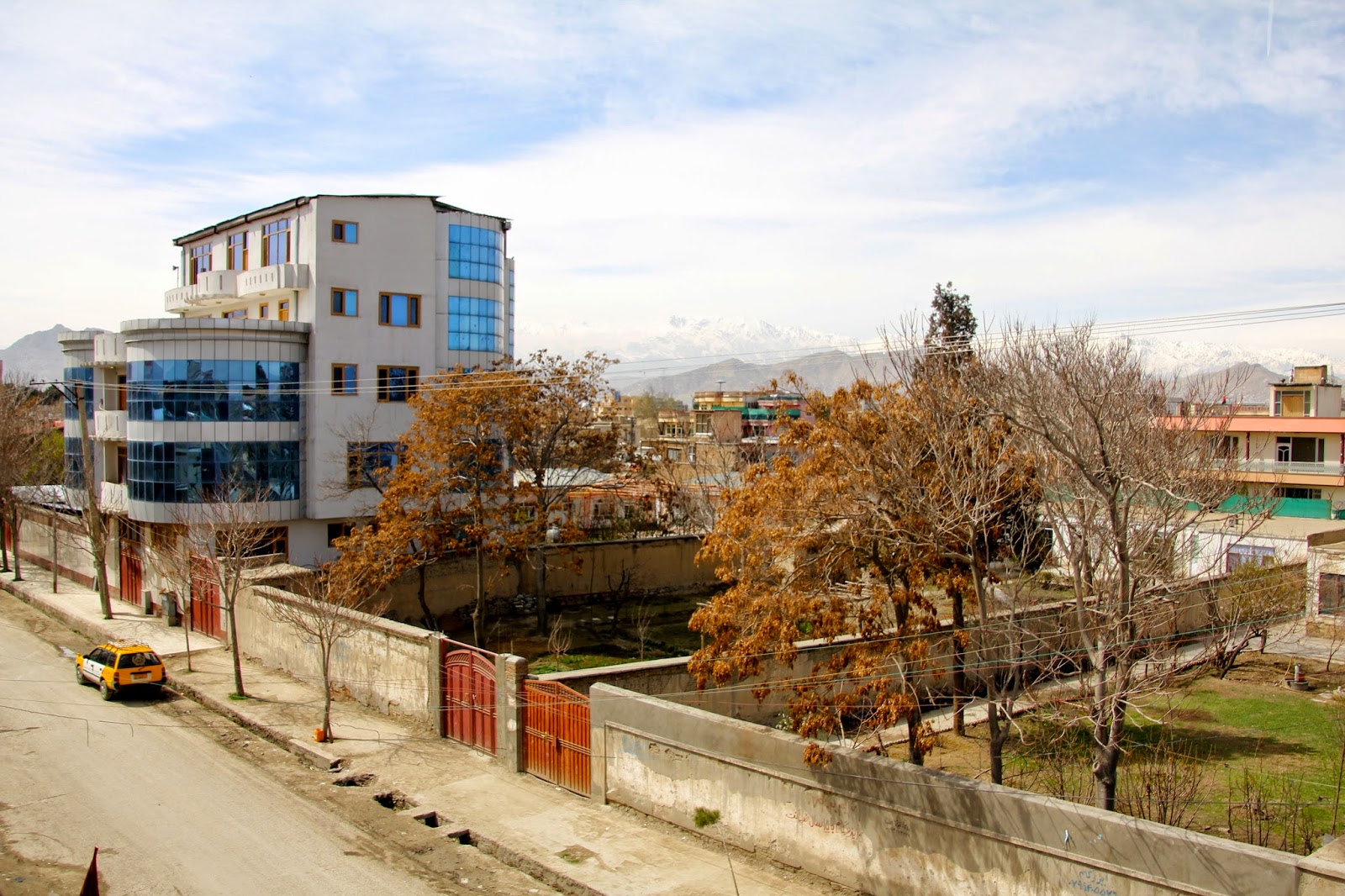
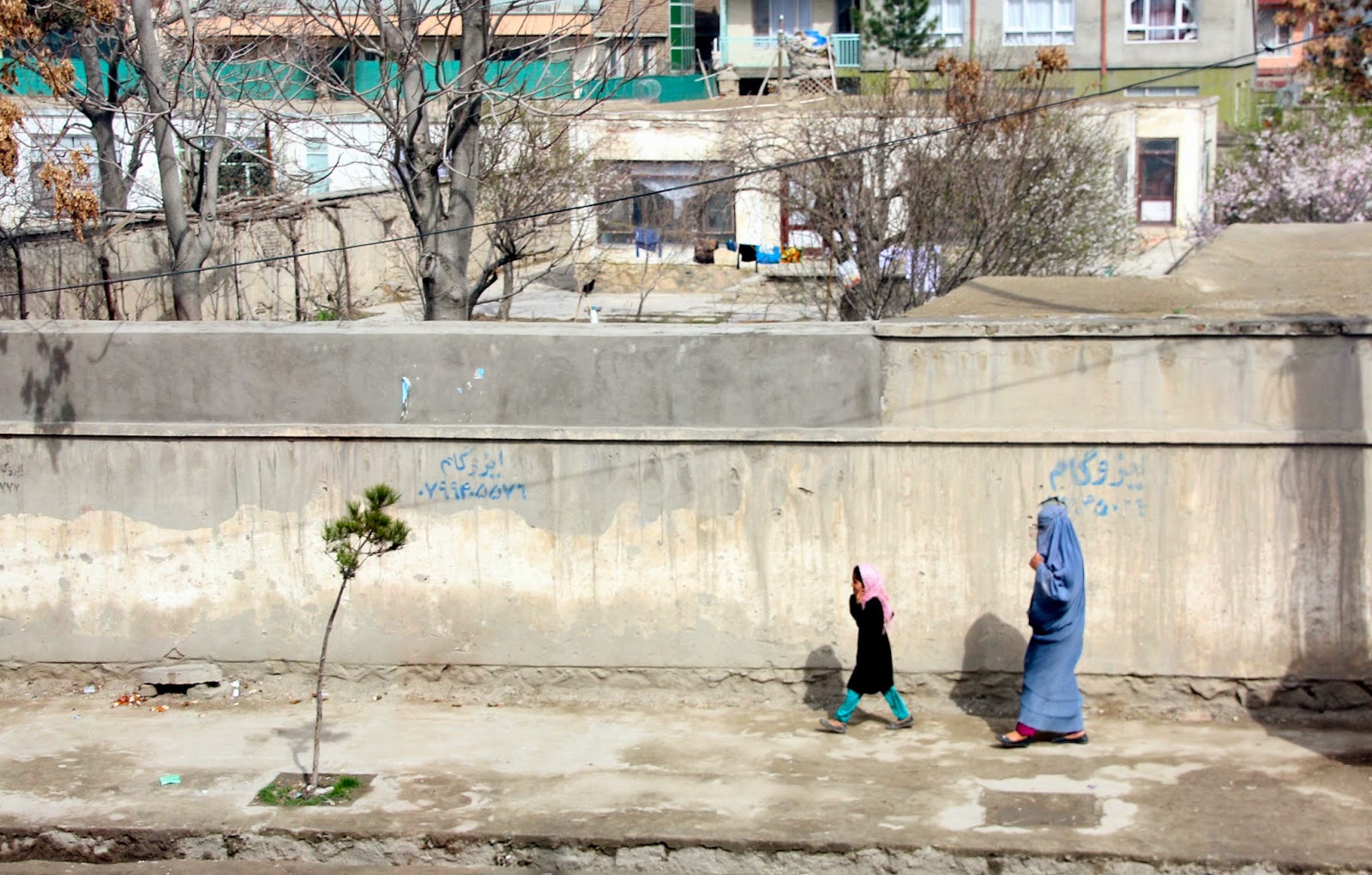
My first day in Kabul I spent the day inside and watched life go by outside the window. People walking by on the way to work, school, shop. Women with children, a man with a little boy, a couple of teenage boys hanging out, school girls on the way home, old men on bicycles bringing home bread, and children flocking to the ice cream man. Ordinary, peaceful life. (Occasionally interrupted by the loud sound of a military helicopter.)


A couple of days later I got the chance to go shopping on Chicken Street (where they don’t sell chickens, but a lot of traditional jewelry, clothing and arts & crafts). Bought a few things, but mostly enjoyed saying hello to the shopkeepers. Salam aleykoum, khob asti? Nam-e chist? Az didaretan khosh shoudum! Practicing my Dari and making new friends. There was Khoja Sardar, the tailor with fantastic colorful Afghan dresses, and Amin, the tea seller on the street who refused to let me pay for my tea because I was his guest, but also Turyaleh, the little shoeshine boy who was so very sad... I felt so bad for him. 


Everyone I’ve come across is quite friendly. And they all offer tea, of course. Afghans are very hospitable. Watching people go by the window outside the house the other day, I was struck by the ordinariness of it, just regular peaceful life. But then you have what happened to Farkhunda, so brutally murdered in midst of day at the mosque by a mob – beaten, stomped, run over by a car, burned – the level of brutality hard to comprehend. How does a mob form to do such a thing, so suddenly, immediately, on a notion (“she’s burning the Quran!”). Would any of these people walking by on the street do that? This and all the security warnings from everybody (some of our Afghan friends feel it’s too dangerous for us to leave the house), it makes you feel life here is precarious and unpredictable, seemingly calm, but at any moment… shit might hit the fan and you might get killed. As has been pointed out, after three decades of war and conflict, the people of Afghanistan are suffering from post-traumatic stress disorder. But it seems this incident has been a wake-up call for many.

I went to the Shah-e-Doh Shamshira mosque and there was a demonstration under way with heavy police presence. A policewoman frisked me, and then we smiled and shook hands, and my companion and I chose to go another direction. On the loudspeaker a voice condemned in Dari and English the "vicious cruel attack." I would've liked to have taken part in this protest but it was not a good idea to get too close.

We instead proceeded down the market street on the other side of the river. Bustling with people going about their lives, shopping for all kinds of sundries, and nobody paying me any mind (as the sole foreigner among them). Feeling a little apprehensive, but then quite safe and comfortable. I stopped and chatted with Moska, a young woman selling bangles on the street, and bought a few gifts for the girls in Herat.


The Women's Prison of Herat

    
As an introduction to our new project in the women’s prison in Herat, here is an account from my first experience in the prison in 2011 (a blog report that I never posted!).
* * *
April 2011

One of the most beautiful and devastating experiences we had in Afghanistan was visiting the women’s prison. 

The prison is located on Prison Street.  The front gate is flanked by gigantic cement planters filled with red pelargonia flowers overrun by barbed wire. Rather symbolic.

All the girls of Simorgh Theatre have their arms marked by the prison guard with signature and date in large red permanent marker across their forearm. This is so they can get out again! And not get confused for a prisoner. Joanna and I are spared the markings, no need.


We enter the courtyard where we are to perform and the women are already gathered waiting for us.

There are little children running around. They come right up to me and surround me, unabashed, unafraid, getting close to me with their little bodies, into my arms, face to my face, and hold my hands. So sweet. They’re two, three, maybe four years old. 

The children stay with their mothers in the prison until age seven and then go to relatives (or orphanage?). It’s not clear to me who decides this, does the mother have any say? Generally, as I understand, according to Muslim law, the child belongs to the mother until age seven and after that the father takes over and the mother no longer has any right to her children. I saw a couple of girls around age 10 or 12 as well, but otherwise they all looked under five. The presence of children is startling and disturbing, but also joyous – making it less oppressive, less like a prison.  Still, it’s a prison. It’s beneficial for the children to be with their mothers, but on the other hand it must be detrimental to their psychological well-being to spend their first formative years behind bars.   


The facilities, however, are so much more pleasant than one might expect of an Afghan prison, or any prison (certainly not like jails in the US). I think I had imagined dark, dank cells with dirt floors and perhaps rats, like dungeons. But these were more like dormitories. The floors are carpeted in dark red, and the rooms are large with bunk beds and colorful blankets and a TV set. The doors are left wide open, but perhaps that’s only for our tour. Then there are the children running about. There’s a playroom for them filled with stuffed animals and toys. And for the women there are occupational activities such as tailoring, embroidery, hair dressing and weaving. Another aspect that adds to a less prison-like atmosphere is the fact that the women don’t wear uniforms, they’re dressed in regular clothes of varying colors (i.e., regular Afghan clothing: tunic with pants, or dress, and headscarf or chador (long black sheet)).

But, the inescapable truth is they are in prison. And cannot leave. And it has severe social consequences.

Our girls perform their show about domestic abuse, specifically centering on conflict between a mother-in-law and her young daughter-in-law.  Domestic abuse is rampant in Afghanistan and not only from the husband but often from his entire family (mother-in-law, brothers, uncles, etc.), and the young bride is sometimes treated as a slave. Many of the young women at the prison are there because they ran away from home – from an abusive husband and/or abusive mother-in-law. Running away from home – whether your parents’ or your husband’s -- is a crime in Afghanistan.  A so called moral crime. Some have fled to escape the fate of an impending forced marriage, or to marry the one that they love, others to get away from an abusive home. The brutality of abuse, physical and mental, is beyond the imaginable.  It is so severe that young girls and women, married off as slaves to an older man and his family, burn themselves to death.  In the Herat area last year there were about 100 recorded self-immolations. That’s two a week! And yet, if these women run away, they are the ones who go to jail. Given their circumstances, prison is a better place for many of these young women. Indeed, having shamed the family by running away, they may very well get killed once they leave prison.

And yet, they are in prison, when they have done nothing wrong but eloping with their lover whom they wish to marry, or escaping an abusive home!  They have been deprived of their freedom for nothing.  This is so wrong and deeply upsets my sense of justice.  But most everything involving women in Afghanistan will upset one’s sense of justice and fairness.


Our show is very well-received. The women laugh a lot and break out in applause, spontaneously at certain dialogue. For instance, when a character speaks to the mother-in-law in a dream and talks about how it is possible to change. This is when I wish I understood exactly what was being said when (the show is in Dari) – what prompted them to clap? After the performance, we ask for feedback from the audience. The women say we should bring the show out to the villages. One woman advocated fiercely and enthusiastically for this. Afterwards Joanna and I go to shake hands with some of the women in the audience. I hunch down to say hello, “Tashakor, khob bud”? I can’t say much more, but smile with my hand to my heart. One woman who is further back in the audience calls out: “What is your name?” Another says: “My friend says thank you very much!”


 Two little children kiss my hand with a ritual of placing their cheek, then the other cheek, then their forehead on my hand (and then kiss).  An old woman kisses my cheeks and forehead and hugs me closely and strongly.

The women disappear behind the prison door manned by two female guards in uniform. Some then appear behind the bars of a window, and our girls gather to talk to them. “Where are you from? Are you married? Children?” And eventually the question – “Why are you here in prison?”

One says she killed her husband. Or rather that is what she was put in here for. She didn’t actually do it, but was accused by the husband’s brother. And that’s all it takes. A woman has no voice to defend herself. And even if someone did kill her husband she may have had cause, considering how horribly many women are treated.  But most of them are in prison simply for running away (as described above).

The women behind the bars of the window told the girls they can’t speak further about why they’re there because they’ll cry if they do, and the guards are there (they don’t feel comfortable to speak, or cry, in front of them).

The children sing us a song. They are lined up neat and tidy in a little square. We think, “Oh, how sweet that they sing for us.” But as we learn later the song they’re singing is about being abandoned and homeless! I decide to give the children the balloons I had bought the other day and I still had in my bag.


Our girls are really affected by this visit and especially because of the children. They are visibly taken and somber on the ride home. “The children…” one girl starts to say and breaks down crying. Another girl is crying silently all the way home. This whole experience touched her, I realize, on a very personal level. She’s facing an arranged marriage, and here are all these women who have escaped forced marriages either by killing the husband or running away. She sees herself in these women, her own future perhaps. Or at the least she acutely understands and feels their plight. Her parents want her to marry someone she doesn’t want to marry, but they insist and are not listening to her. She’s been very sad the last few days. I’m told she’s asking to join us a lot on our excursions, because she wants to get away from home. She’s 17, she’s not ready to lose her freedom. That’s it, her life will completely change. And there’s nothing we can do, to help her. I wonder what’s going to happen.

Our play about a mother-in-law who treats her son’s young wife badly has a happy ending. The mother-in-law in the end understands the error of her ways and reconciles with her daughter-in-law. They find a way to live happily together. Later I learn that one of the women in the prison came up to one of our girls and expressed how much she wished her mother-in-law had seen this play. She was in prison because she had killed her mother-in-law.

-----------------
P.S.
The girl in our troupe facing a forced marriage got a happy ending too. So far. Her parents relented and she did not have to marry. She has been able to continue with the theater. And she’ll be joining us on this new project in the prison!


Back to Afghanistan


I’m in Afghanistan again! It is now four years since I was here. About time for a return! I am going back to Herat to work with members of Simorgh Theatre for a project in the women’s prison.

Based on our first experience presenting a show in the prison back in 2011, Bond Street Theatre is now developing a creative program specifically for the women in prison – a physical theater-based psychosocial empowerment program! This year-long initiative to bring creative workshops to the women will use theater as a rehabilitative tool to process and heal traumatic experiences, encourage self-expression, build self-esteem, develop communication and leadership skills and the motivation and ability to better manage their lives both inside and outside prison. This kind of program has never before been done in prison in Afghanistan. It's an exciting venture. We will discover and develop as we go! 

Everyone we’re in contact with (including the authorities) are very positive to the proposed program, and based on our prior experience, the women welcome this activity.

Together with Joanna Sherman, I will help get things started for a month and after that the girls of Simorgh take over to keep the program going. The goal is to establish a self-sustaining, continuing drama group and lay the groundwork for similar programs in other prisons. 

We will see how things go! Stay tuned for updates!


More drama in Sudan


This past January I finally had the opportunity to return to Sudan! Happy happy joy joy! 

And finally now posting about it...

Woeballay sajami! (Oh my God!) What a rollercoaster. I was all geared up to go and then the program got completely canceled because the Sudanese ministry wouldn’t give a permit. And then suddenly we did get a permit through another ministry. But then I couldn’t get a visa! Everybody else had gotten theirs, but me. Every day I was waiting with baited breath and packed bags to find out if today would be the day that I’d get my visa and could get on a plane headed to Khartoum. And the days went by! It started to seem that a return to Sudan was not in my stars. But finally, finally I got it.  Sudan, here I come!

Alhamdulillah, together again with my wonderful students! After the challenging way things had ended last year and now the uncertainty of my return, there was so much anticipation built up and then so much joy in actually seeing each other again in flesh and blood. We didn’t think it possible and here we were. Happy reunion.

Because of the delays we only ended up having 10 days together. It may sound like plenty but it’s not nearly enough! There was so much to try to accomplish with training and creating performances. A whirlwind of intense activity, over much too soon. But I was just glad for any time at all with my dear students.

I hit the ground running and went straight from a 13 hour flight to teach with no time to lose!  This time I worked with two groups of young adult students at Sudan University, Department of Drama. In addition to my old students, I had a whole new group to contend with as well. The first day was a marathon of auditions to select participants from a seemingly endless parade of students who were all gung-ho to join. I would of course love to work with them all, but I had to settle on a manageable group of about 20.


Fierce women!

The security guard got a kick out of our antics!


With the new students we developed several short pieces on social issues relevant to Sudanese youth.

Three male students did a piece on drug addiction among college students, performed entirely through movement with no speaking. All of them died at the end! It was intense. I didn’t realize drug abuse would be a huge issue among Sudanese youth, but I guess it’s the same everywhere. And certainly in Sudan there is a lot of frustration and despondence over lack of opportunities for youth, which I imagine might drive many to escape into drugs.

Another group did a piece about female circumcision and its harmful consequences, focusing on the reality of childbirth complications. The mother ends up dying and the young father ends up alone with his newborn girl, and swears the same thing will never happen to her. In Sudan most girls are circumcised but there seems to be a debate and a push to end this practice.

A third group created a piece about women’s education and how often rural, traditional families are against letting their daughters attend university. Many of the girls in the class had struggled with their families about letting them study and especially to let them study drama. They expressed this right away in our first introduction. Of course, even in the Western world parents don’t want their kids to study drama… These young women were passionate and proud of their choice to devote themselves to theater.

Then another group explored the issue of youth losing touch with their Sudanese cultural roots and identity, instead obsessed with watching Indian and American movies. This became a very funny scene with a trio acting out Bollywood and action film sequences. One female student had an actual black belt in karate (!) and it was fabulous to see her karate kicks, “knocking out” the two guys. Girl power! The audience loved it.

Finally, we had a clown trio who played with the theme of young men who are not able to marry because of the high cost of a wedding. In Sudan it has become a norm and a requirement to spend tens of thousands of dollars on a lavish wedding. As much as $50K. Insane! But no self-respecting young lady will agree to a cheap wedding. What would people say?! So many young men simply can’t get married, and neither can the young women then, leading to frustration expressing it in various destructive actions, one of the students explained, such as petty crime, drug abuse, as well as premarital sex. There were three guys in the class who were each really funny personas, just naturally, and I thought they would make an excellent clown trio. I was right! They took the idea and ran with it – three clowns lamenting that they can’t get married and desperate to find someone, and finally they pick a woman in the audience, singing and dancing off with glee to go get her – it was hilarious. 

The students were all wonderful, but overall needed a lot of training. We worked really hard, and in the end they all rose to the occasion and did a fantastic show. It was an informal showing this year for other university students. No gigantic event like last time with press, officials and huge audience, we kept it on the lowdown this year. But still a great culmination to an intensive 10 days.


Dearest to my heart, of course, was getting to work again with my students from last year. We have a special bond. There was a magic that happened last year in this group in our work together, Lydia and I and the students. I have special love for these students. Even if they drive me nuts sometimes (Sudanese time!*). And they are truly in a whole other league from the other students. These students are very much in their bodies and really into movement work.
[*Sudanese time... Starting a half hour or so late.... or more!]

They expressed a strong desire to learn more about movement and how to express ideas without speaking. But it seemed to come from a lingering fear that being too explicit in their work would get them into trouble. They are still traumatized from last year’s experience! Repeatedly I was asked to please make sure that their work is symbolic enough so they won’t get stopped again. We spoke about what happened last year. The students told me there had been negative repercussions. The press and all the mosques denounced the show, and they got in trouble with their teachers (this is surprising, I must say, their drama teachers?!). Because the students had said “bad things” about Sudan. One student told me he lost a job opportunity once the prospective employer found out about his involvement in the show. But others said they had also had positive effects. It had boosted their position as respected theater practitioners and helped get a position as a university teaching assistant. Regardless of consequences, they were certainly determined to continue on!

They are such passionate young people -- and deeply philosophical, spiritual in their quest of expression... They wanted to explore a movement (dance theater) piece about struggle, survival and solidarity among disparate peoples seeking unity. It got deep. At first they spoke of focusing on a positive perspective this time, leaving the audience feeling good, finding unity. But little by little they started weaving in the theme of being oppressed as a people... Inevitably!


I was sad to have to leave them so soon and not be there with them for their final performance at the embassy. Because, yes, a big performance had been arranged and finally they would get to have their show without interruption! But, alas, it was not to be! I thought we had a happy ending…


On my last day with them they took me out on an excursion by the Nile and treated me to traditional Sudanese food. Such joy and spirit and love! A wonderful way to end this time around. 

I had to leave but a week later they were to perform their show, and I was tough on them to motivate them to get together on their own and rehearse. And then because of some mishaps, on the very day of performance they were told they could not perform! Foiled again! This time it really was bureaucratic red tape (security issues at the embassy), and not the Sudanese gov’t that stopped it, but nonetheless of course the students feel shut down. I felt so bad. I had promised them they would have their show and they would not get shut down. But sometimes, shit happens, as they say. Do not let it keep you down. Onward and upward! 

Love my Sudanese students so much!

Showdown in Sudan (#4)


On the day of our actual performance, the whole event was shut down. The imam of the main mosque had denounced the event on Holy Friday, the day before, and that’s no small matter in Sudan. There were those in the government completely against this entire exchange. I was in midst of teaching an additional class in clowning at another location when the rumors reached us.  I gathered my students together and told them what might be happening. And I said what mattered most was the experience we shared working together over the past 10 days. They said they would perform the show somewhere no matter what and send me the video for me to see. We arrived at the performance space with a mix of trepidation and excitement.  I saw military police stationed at the entrance and thought, "Uh oh, this is getting serious."  Our performance was in a huge parking lot next to a major conference hall.  It turned out the President was next door at a conference!  This was one of the reasons given for why we could not proceed with our performance.  Nonetheless, after much negotiation between our producers and government representatives, the show was back on again.

However, all the hold-ups delayed everything and we started really late.  My students waited and waited for their chance to present.  (There were many acts in the entire performance evening, including music, rap and hip hop dance.)  As we were getting ready we began to dance to the music playing.  One of the government representatives approached us and said "no dancing."

(The evening before, a government rep had told us all the women must wear headscarves during the performance or they would cancel the whole show.  Several of the women were very upset by this and one flat out refused.  They compromised by wearing a hat and tucking in their hair.  I wore a headscarf in solidarity.  Otherwise, as a foreigner I was not obliged to wear one (unlike my experience in Afghanistan).  Indeed, not all Sudanese women wear headscarves, although I would say it’s the practice of about 99% of women.  Covering your hair is not explicitly required, but it can be arbitrarily enforced by the authorities.  Recently, a Sudanese woman was arrested for not wearing a headscarf and is on trial facing a possible punishment of 40 lashes.)

And then, finally, it was my students' turn. They got on stage, began their performance, and they rocked it. There were over a thousand people in the audience (I was told as many as 3,000) who clapped, whistled and laughed in recognition of what my students were presenting.  After all the apprehension, this was so affirming and satisfying to witness, and I was so excited for the performers.

And then I was told we had to cut their performance short! The authorities mandated the whole event end at a certain time. The clock struck when my students were only halfway through their performance.  I was the one who had to physically get up there on stage and stop them.

The students were absolutely devastated.  After working so hard for 10 days, after all the build-up and anticipation, they were finally getting to perform and have their say -- and then to have the rug pulled from under them!  They got so upset they refused to leave the stage and were near ready to riot.  It was getting serious.  They shouted at me:  “We leave this stage only because of you, Anna, because of you; otherwise we refuse!” It was heart-wrenching.

In the midst of this the organizer tells me, “You must leave now!” and I was immediately whisked off to the airport for my scheduled flight.  I had no opportunity to gather the students and talk about what happened and say goodbye.  Normally I would take time for a debrief, which is something very important to do at the end of a project, especially one as intensive as this one. It was really hard to leave in such a state of incompletion. I quickly handed a stack of certificates to Hashim for distribution -- and he reached out and hugged me. This set off a chain-reaction of spontaneous embraces.  No words, simply the most deeply heartfelt hugs.  It affirmed for me that even in the face of this terrible breakdown our bond was not broken.  It is difficult to put into words the mix of emotions of the deeply meaningful exchange that had taken place between us, so suddenly cut short.   

* * *
I have since been in communication with them. They are in good spirits and ready to perform the piece again elsewhere. They said: "We are artists and we are strong, we have a message to show the world and you showed us how to give it out."  

This was truly one of the most rewarding experiences I’ve had teaching and traveling abroad, and trying to make a difference in the world.  It’s been a privilege to experience Sudan and its people, and to get to work with these beautiful and talented individuals.  I hope to be able to come back soon again.  If I'll get another visa... There has been a lot of controversy in the local press and government in Sudan about our program.  Our supporters in the government are still defending the program – they are the ones facing the consequences now (among them Mr. Obay who turned out to be an ally and advocate) – I hope they prevail!


For more photos, go to: YES Sudan Highlights